
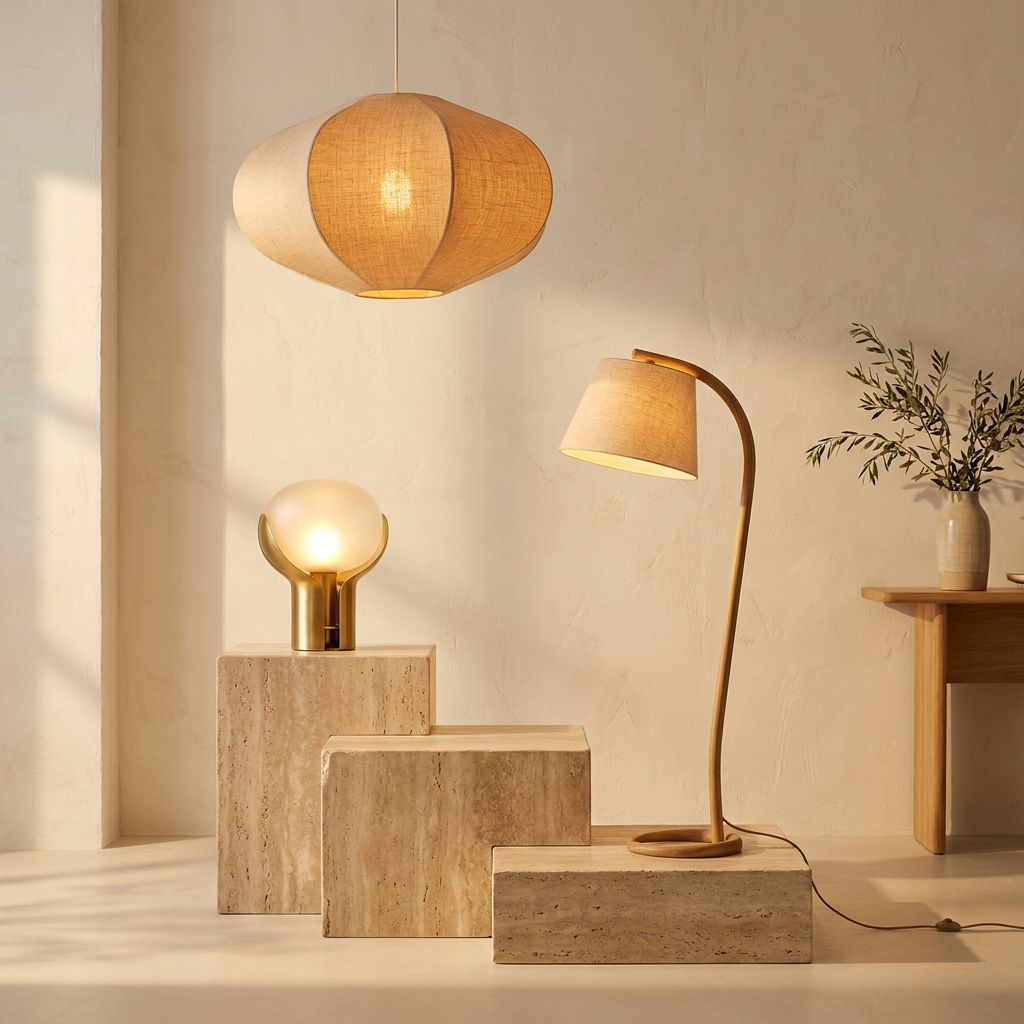
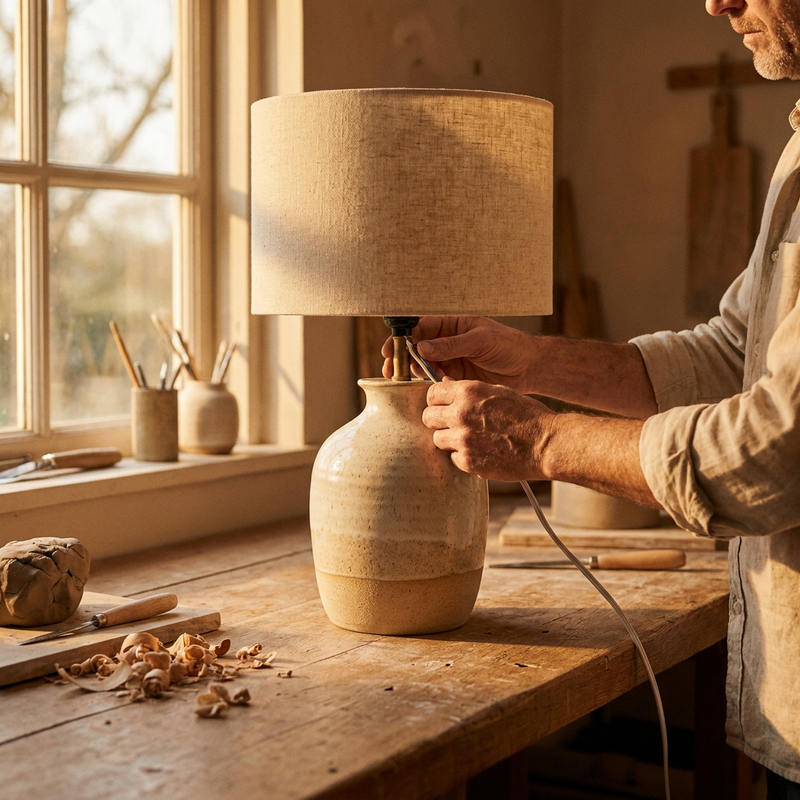
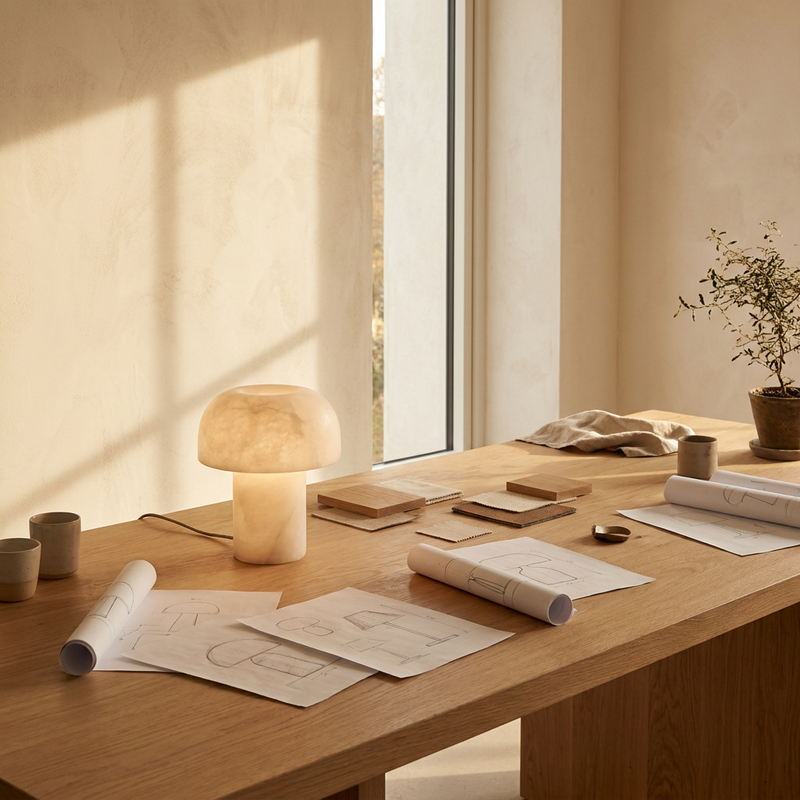
Wabi sabi lighting is not a look so much as an attitude. It comes from a Japanese way of seeing that finds beauty in things that are simple, natural and a little imperfect. In a home, that means light fittings that feel quiet and handmade, with textures you notice and a glow that is soft rather than showy.
What does wabi sabi mean in lighting?
Wabi sabi values simplicity, natural materials and the marks that time and nature leave behind. Translated into lighting, the principles are:
- Natural, textured materials such as stone, paper, fabric and unglazed surfaces.
- Soft, warm, diffused light that avoids harsh glare.
- Organic, slightly irregular shapes rather than perfectly engineered ones.
- Restraint, with fewer, better pieces in a room.
Wabi sabi pendant lights to explore
These designs suit the mood well:
- The Sena Pleated Silk Pendant has layered fabric and silk gathered into gentle pleats that glow from within, with a quiet wabi sabi simplicity.
- The Kumo Organic Pendant Light takes its name from the Japanese word for cloud, with a pebble-like form that looks shaped by hand.
- The Kairi Travertine Pendant Light is cut from natural travertine, so no two shades are identical, and the pores and veining are part of the point.
- The Nara Travertine Pendant Light pairs open stone with a warm walnut cap and throws dappled light across walls.
Embracing natural variation
With natural stone, small differences in colour, pitting and veining are not defects. They are evidence that the material is real, and they are what makes each pendant slightly different from the next. If you want a perfectly uniform finish, wabi sabi may not be the right direction. If you enjoy a piece with character, it is exactly right.
How to style wabi sabi lighting
Keep the palette earthy: sand, stone, clay, soft white and warm timber. Use fewer fittings and give each room to breathe. Choose warm white light, around 2700K to 3000K, and consider a dimmer so the glow can drop low in the evening. Group small pendants at different heights for a composition that feels collected rather than matched, or let one large sculptural shade stand alone.
The approach sits close to Japandi design. Our Japandi lighting guide explains how the two blend, and the complete buying guide helps with sizing and placement.
Frequently asked questions
Is wabi sabi the same as Japandi?
They are related but not identical. Wabi sabi is a philosophy of valuing imperfection and simplicity. Japandi is an interior style that combines Japanese and Scandinavian design. Wabi sabi ideas often shape Japandi rooms.
What materials suit wabi sabi lighting?
Natural stone, fabric, silk, paper, timber and textured finishes. Look for matte surfaces and soft, diffused light.
Should wabi sabi lighting be bright?
Generally not. Soft, warm and layered light fits the mood best, with a dimmer to control the level.
Browse our full pendant light collection.