
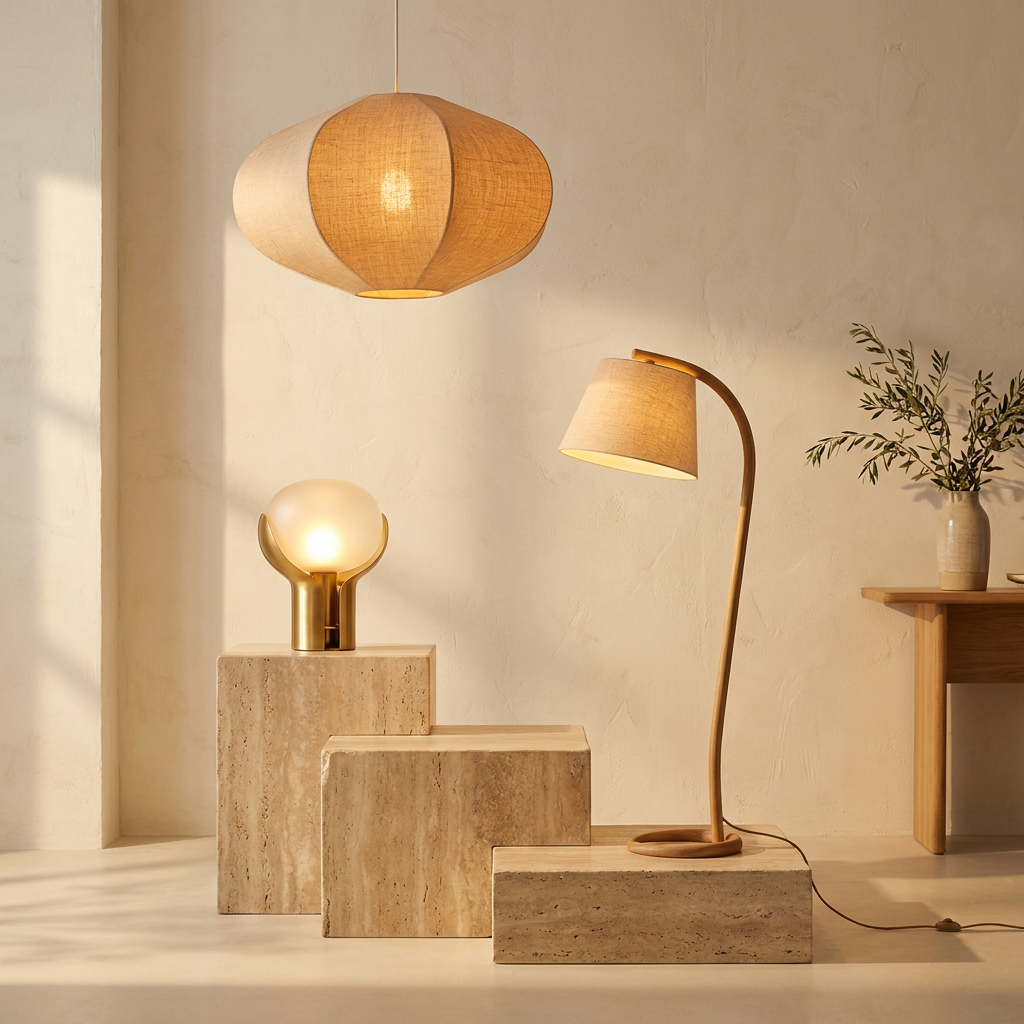

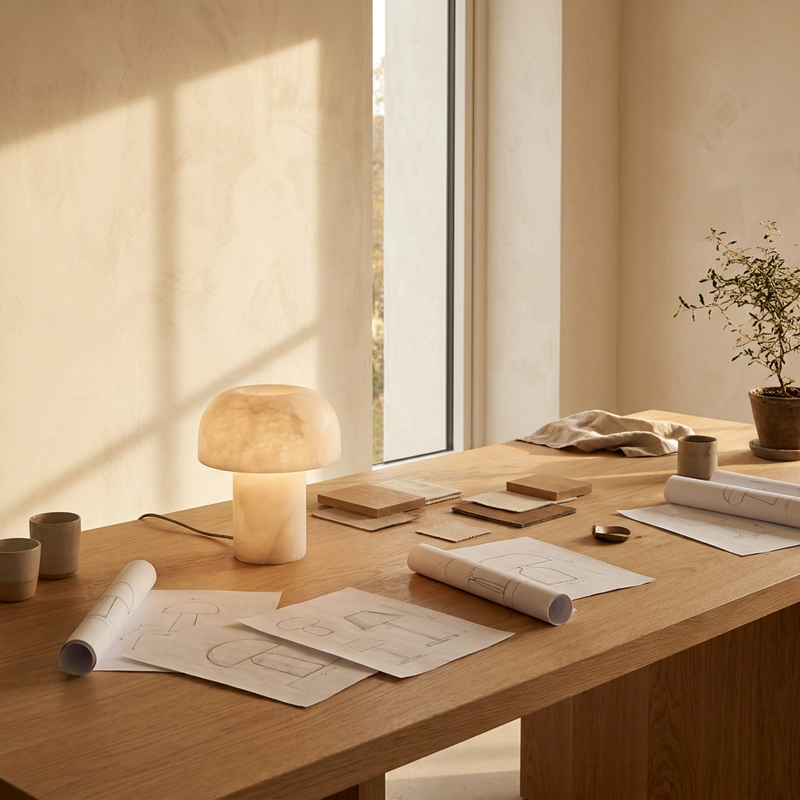
A pendant light does more than light a room. Hung well, it anchors a dining table, softens a kitchen island or gives a hallway a quiet focal point. This guide covers the decisions that matter most, so you can choose with confidence.
1. Start with the room and the job
Decide what the light needs to do. Over a dining table or island it should give warm, even light at eating height. In a bedroom or hallway it is often there for atmosphere, so a softer, more diffused shade works beautifully. Our pendant light collection is chosen with these different roles in mind.
2. Choose the right size
A simple rule for a dining table is to choose a pendant or cluster roughly one third to one half the width of the table, leaving space at either end so nobody bumps their head. Over an island, several smaller pendants spaced evenly often look more balanced than one large one. In a hallway or stairwell, scale to the ceiling height and the width of the space.
3. Get the drop height right
As a general guide, the bottom of a pendant over a table sits around 75 to 90cm above the tabletop, high enough to see across the table and low enough to feel intimate. Ask your electrician to set the final height once the light is in place. We cover this in more detail in our pendant light height and spacing guide.
4. Think about material and glow
- Travertine and alabaster give a warm, stone-lit glow and a tactile, natural feel.
- Smoked or amber glass adds depth and a soft, atmospheric tint.
- Fabric and silk diffuse light gently and avoid glare.
- Slim metal and linear forms suit modern, architectural spaces.
Natural materials vary from piece to piece, which is part of their character.
5. Choose the bulb and colour temperature
For living and dining spaces, a warm white bulb of around 2700K gives a flattering, cosy light. If you want to adjust the mood through the evening, pair a dimmable bulb with a compatible dimmer switch. Check each product page for the fitting and whether dimming is supported.
6. Match your interior style
Calm, natural materials and simple forms work across Scandinavian and Japandi interiors (see our Japandi lighting guide), while sculptural glass and architectural lines suit contemporary homes.
7. Plan the installation
Hardwired pendants should be installed by a qualified electrician in line with UK wiring regulations. Our FAQ answers common installation and care questions.
Ready to browse? Explore our designer pendant lights.