
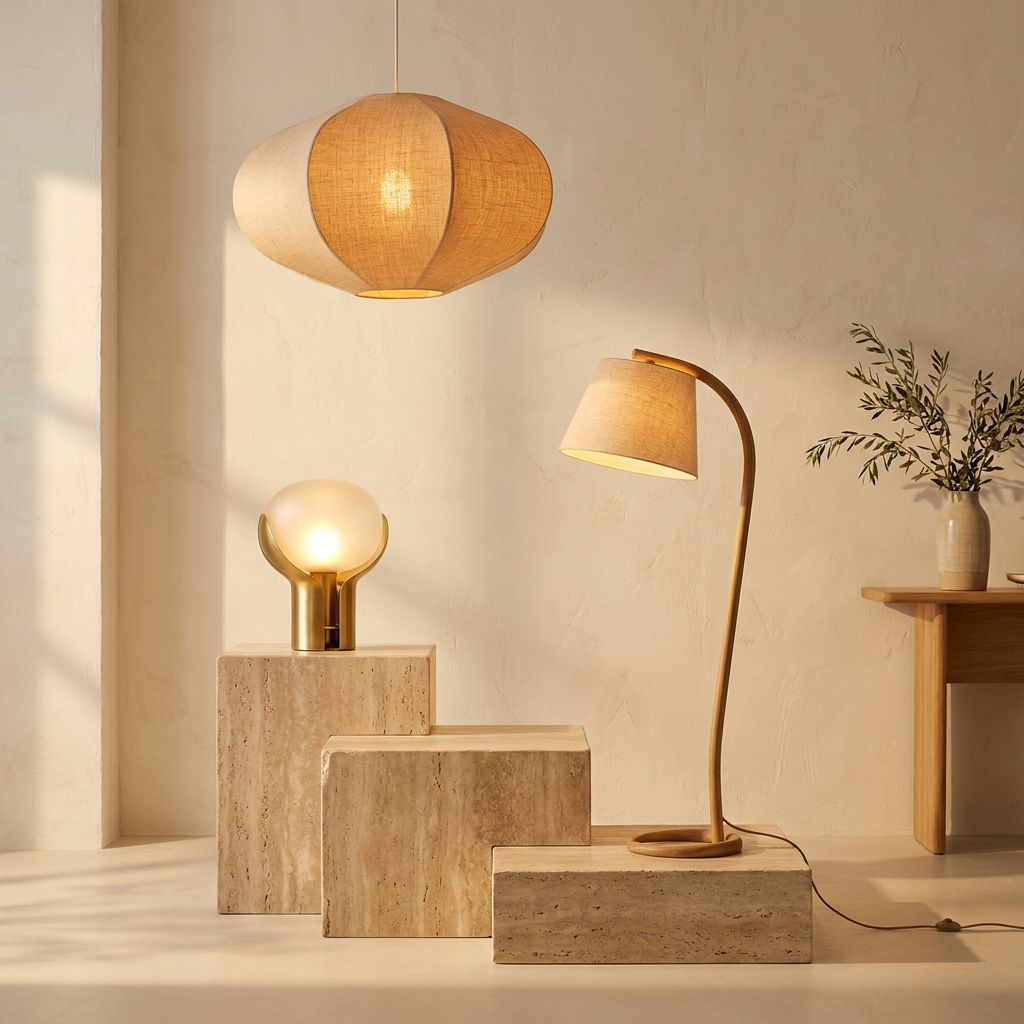
A stone pendant light brings something no other material can: weight, texture and a glow that is slightly different every time. Travertine and alabaster are the two stones most often used for pendant lighting, and they behave very differently once the bulb is on. This guide compares them so you can choose with confidence.
Travertine pendant lights
Travertine is a natural stone formed over thousands of years, with open pores and soft tonal veining. It is warm, matte and tactile. In a pendant, the stone is usually honed so the surface feels soft rather than glossy. Because travertine is opaque to dense, it tends to direct light through openings and pores rather than glowing evenly all over.
- The Kairi Travertine Pendant Light is cut from solid travertine, in pure or rounded cylinder forms.
- The Nara Travertine Pendant Light is open and porous, so light escapes through the stone and scatters dappled patterns.
- The Tove Travertine Pendant Light is a slim disc lit from beneath by integrated LEDs.
- The Mira Travertine and Glass Pendant pairs a stone dome with a glass globe.
For more, read our travertine pendant light buying guide.
Alabaster pendant lights
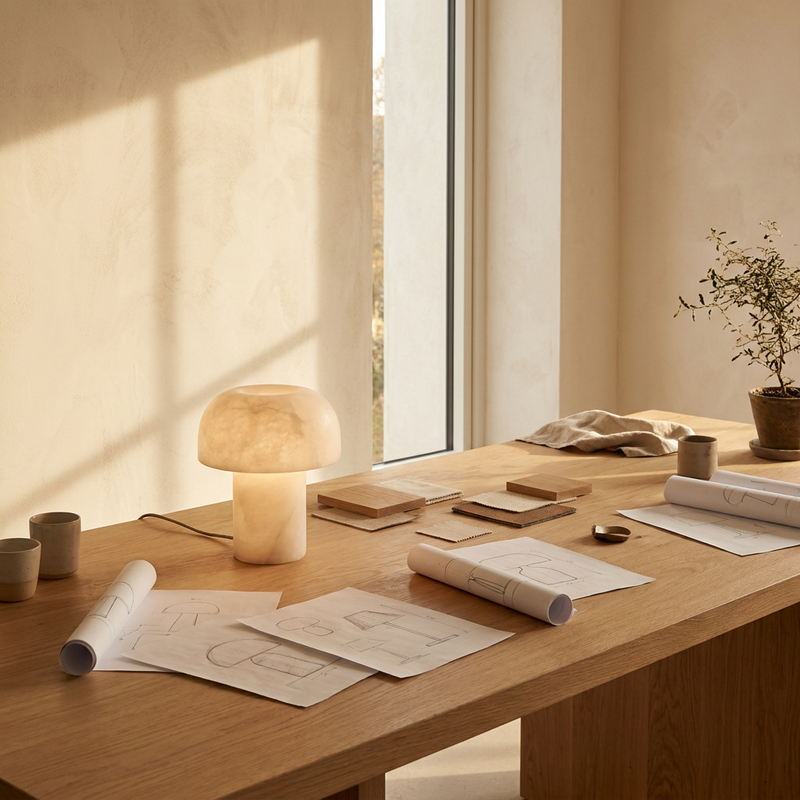
Alabaster is one of the few stones that light can pass through. When lit, it glows with a soft, milky warmth and reveals fine veining that is hidden when it is switched off. The Lune Alabaster Pendant Light sets a small block of alabaster in a warm brass frame (Ø14 x H15cm), which feels precious and quietly luxurious. See our alabaster pendant light guide for more detail.
Travertine vs alabaster: the key differences
- Light: alabaster glows through the stone. Travertine casts a more directional, textured light.
- Look unlit: travertine is warm, sandy and sculptural. Alabaster is pale and delicate.
- Mood: travertine feels grounded and earthy. Alabaster feels soft and luminous.
- Care: alabaster is a softer stone and should be kept away from water and harsh cleaners. Travertine is more forgiving but still benefits from gentle care.
Natural variation is part of the appeal
No two stone shades are identical. Colour, pores and veining vary from piece to piece, and that is a feature of a real natural material, not a fault. If you order more than one for a cluster, expect them to feel related rather than matching.
How to care for a stone pendant
Dust regularly with a soft, dry cloth. Avoid water, abrasive pads and strong chemicals. Switch the light off and let it cool before cleaning. If you are fitting a stone pendant over a kitchen island, keep it clear of cooking splashes where possible.
Not sure how to hang it? See our height and spacing guide and the complete pendant light buying guide.
Frequently asked questions
Is a stone pendant light heavy?
Stone is heavier than glass or fabric, so check the product details and make sure the ceiling fixing is suitable. If in doubt, ask a qualified electrician.
Does a stone pendant give enough light?
Stone shades are decorative and soft. Use them as ambient or accent light, and add task lighting where you need to read or prepare food.
Which stone is better for a kitchen?
Either works. Travertine is a good choice if you want a more textured, forgiving surface, and alabaster suits a soft glow in a clean, quiet kitchen.
Browse all stone and glass pendant lights.