
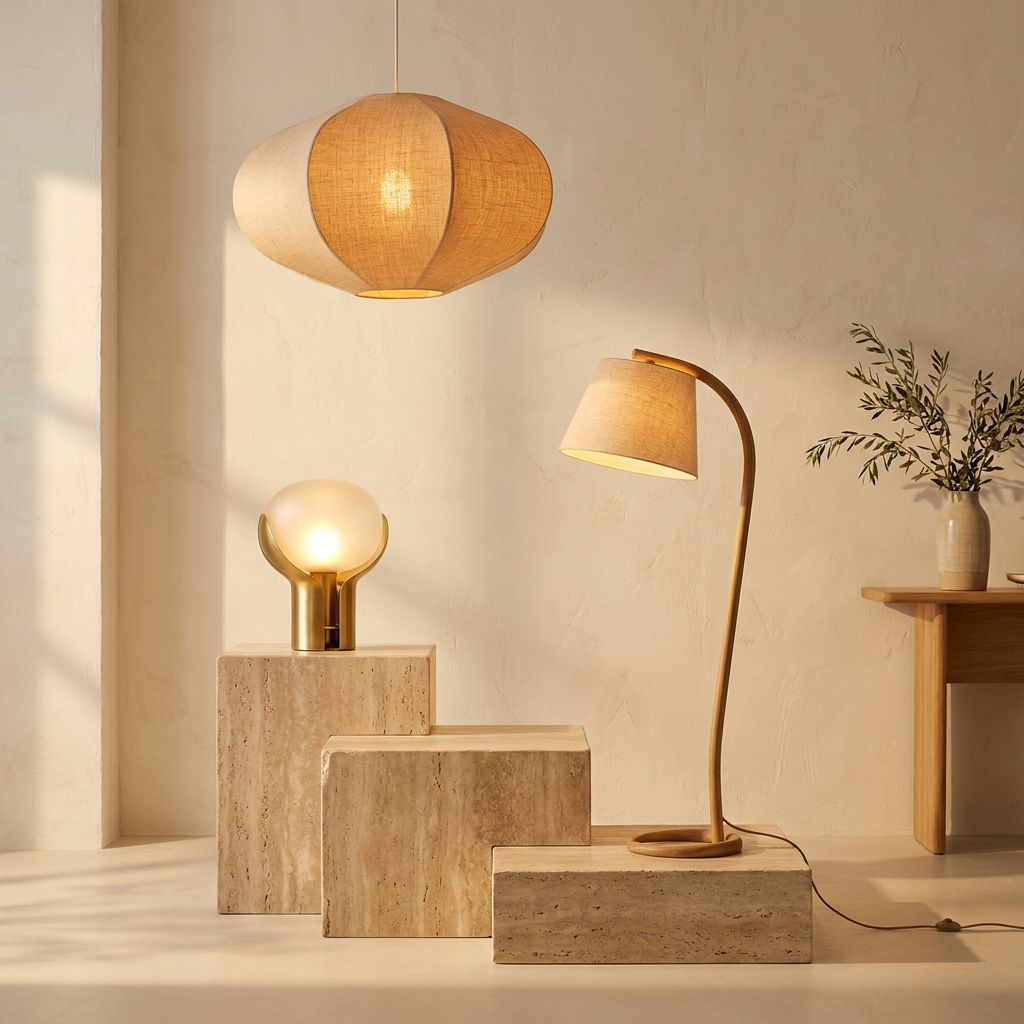
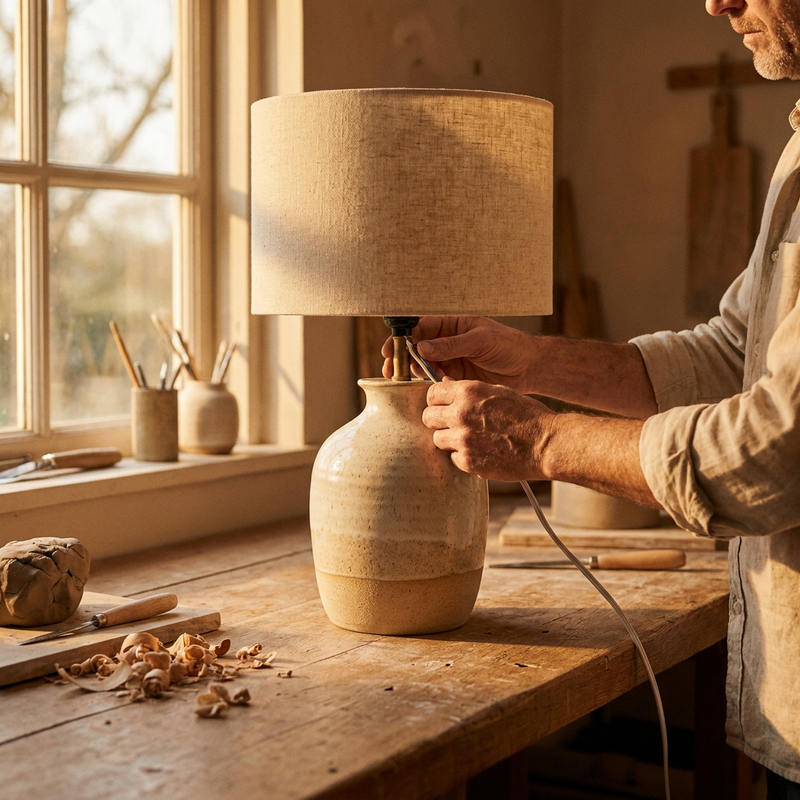
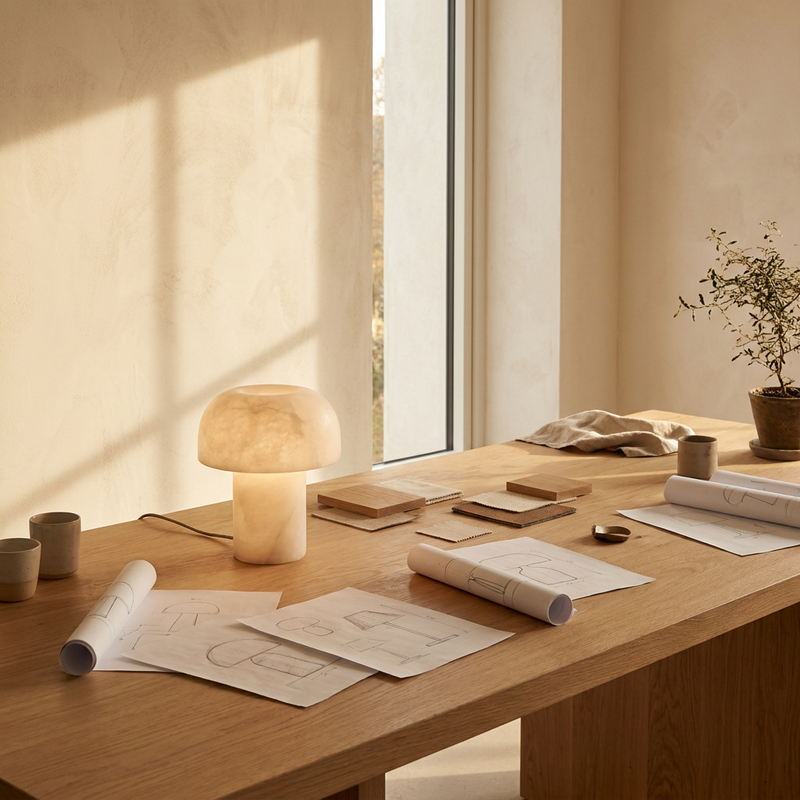
A Scandinavian pendant light is defined by restraint. Simple forms, natural materials and soft, warm light matter more than ornament. If you want your home to feel calm, bright and lived in, the right pendant does a great deal of the work. This guide explains what to look for and how to bring the Nordic look into your own rooms.
What makes a pendant light Scandinavian?
Scandinavian design grew from long dark winters, so light is treated as something precious. The result is a handful of consistent ideas:
- Natural materials: stone, glass, wood and fabric rather than heavy metal.
- Soft, diffused light: shades that glow rather than glare.
- Simple, honest shapes: cylinders, domes and discs with no unnecessary detail.
- A pale, quiet palette: whites, greys, sand and warm timber.
Scandinavian pendant lights to consider
Several of our pendants suit this look well, as they share a calm, natural character:
- The Kumo Organic Pendant Light has a softly irregular, pebble-like form in white or grey, available in five sizes from 30 to 80cm.
- The Sena Pleated Silk Pendant diffuses the bulb through layered fabric and silk, in Ø30, 40 and 50cm.
- The Nara Travertine Pendant Light pairs natural stone with a warm walnut cap.
- The Tove Travertine Pendant Light is a slim stone disc with a low 7cm profile.
- The Kairi Travertine Pendant Light brings an architectural cylinder of honed stone.
Choosing the right light colour
Warm white light, around 2700K to 3000K, is the Nordic standard. It flatters timber, linen and stone and keeps a room feeling cosy in the evening. Avoid very cool white bulbs, which can make natural materials look flat. A dimmer is worth adding so you can shift from bright daytime light to a low evening glow.
Where to hang Scandinavian pendants
In a dining room, one pendant or a short row above the table keeps the space open. In a bedroom, a pair of small pendants either side of the bed replaces bedside lamps and frees up surface space. In a living room, a single large shade over a sofa or reading chair acts as a quiet anchor. For measurements, see our pendant light size guide and the height and spacing guide.
Scandinavian or Japandi?
The two styles overlap, but Japandi adds a little more of the Japanese appreciation for texture, darker tones and handmade imperfection. If you like the warmth of Scandinavian design with more depth, read our Japandi lighting guide.
Frequently asked questions
What colour bulb is best for a Scandinavian interior?
Warm white, around 2700K to 3000K, gives the soft, candlelit glow typical of Nordic homes.
Are Scandinavian pendant lights always white?
No. White and grey are common, but natural stone, smoked glass and warm timber details are just as typical. The common thread is a soft, quiet look.
Can I mix Scandinavian pendants with other styles?
Yes. Natural materials mix easily. Keep to a limited palette and repeat one material, such as travertine, across the room.
Explore the full range of designer pendant lights.