
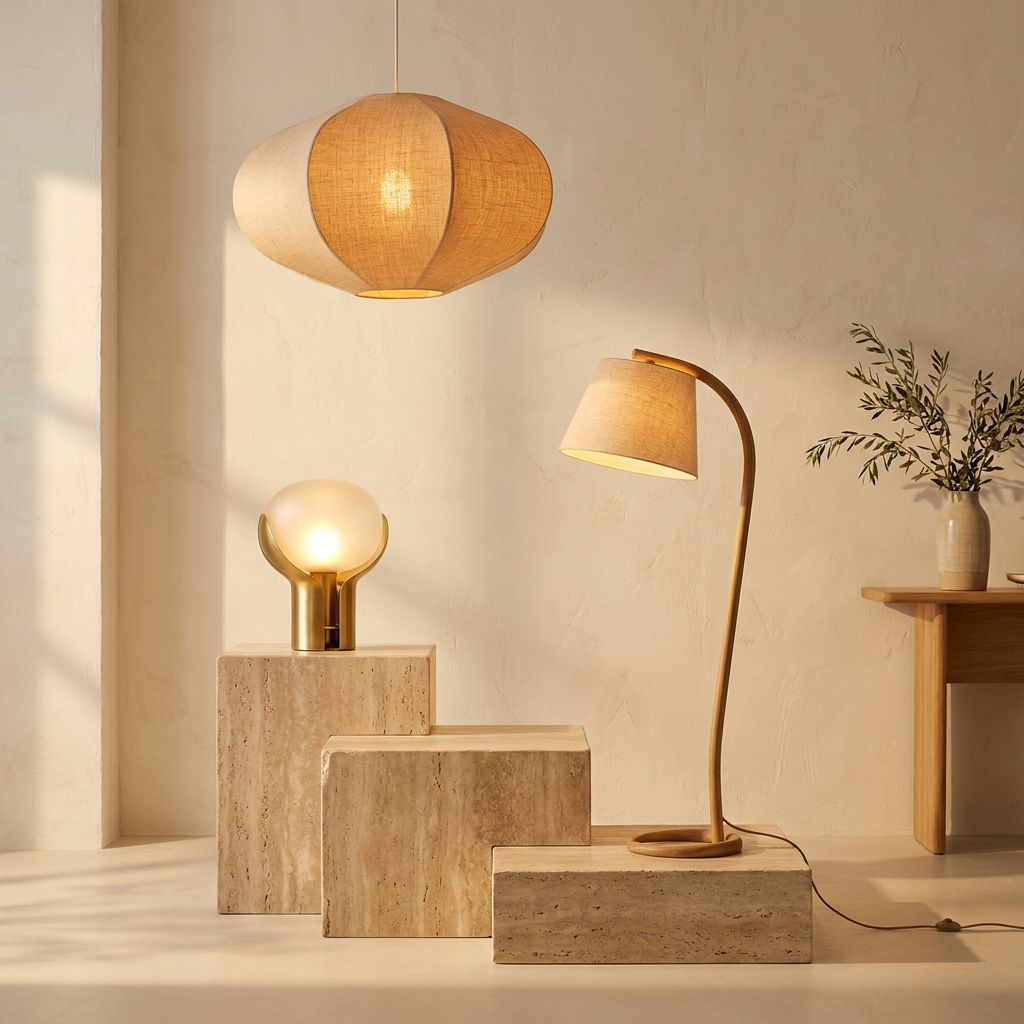

The bulb is half of a pendant light. The right one makes stone glow, glass shimmer and fabric feel soft. The wrong one can make a beautiful shade look harsh or flat. This guide explains the four things to check when choosing a pendant light bulb: colour, brightness, shape and dimming.
1. Colour temperature
Colour temperature is measured in kelvins (K). For living spaces, warm white at 2700K to 3000K gives a cosy, candlelit tone that flatters natural materials. Cooler white at 4000K and above feels crisper and suits task areas, but it can make stone and fabric look flat. Several of our designs use warm 3000K light, including the Kumo Organic Pendant Light and the Arden Linear LED Pendant.
2. Brightness in lumens
Brightness is measured in lumens, not watts. As a guide:
- Ambient or accent pendants: about 300 to 500 lumens per bulb.
- Over a dining table or kitchen island: about 400 to 800 lumens per bulb, depending on how many pendants you have.
Soft shades such as stone, alabaster and silk absorb or diffuse some of the light, so you may want a slightly brighter bulb than you would in an open glass shade.
3. Bulb shape and fitting
Check the bulb type listed on the product page before you buy. Common fittings include E27, E14 and G9. For shades where the bulb is visible, such as the Halden Smoked Glass Pendant and the Solen Glass Dome Pendant, the bulb is part of the look. A warm, low glare LED with a soft filament gives a beautiful amber glow through tinted glass. For enclosed stone, silk or alabaster shades, such as the Lune Alabaster Pendant Light, the shape matters less and the light quality matters more.
4. Dimming
A dimmer lets one pendant do many jobs, from bright evening preparation to a low glow. For dimming to work smoothly:
- Use a bulb that is labelled dimmable.
- Use a dimmer switch that is compatible with LED bulbs.
- Avoid mixing different bulb brands on one dimmer, which can cause flicker.
Some designs, such as the Arden, come in a dimmable version with a remote control, and others have integrated LEDs, such as the Tove Travertine Pendant Light, where you choose warm or cool light when you order.
Choose LED for efficiency
LED bulbs use far less energy than older bulb types and last much longer. Look for a high colour rendering index (CRI of 90 or above) so that stone, timber and fabric show their true colours.
For help placing pendants, read our complete pendant light buying guide and avoid the common errors in our pendant lighting mistakes guide.
Frequently asked questions
What colour bulb is best for a pendant light?
Warm white, around 2700K to 3000K, is best for most homes. It is flattering and relaxing, especially in dining rooms, bedrooms and living rooms.
How bright should a pendant light bulb be?
Between 300 and 800 lumens per bulb is typical. Use the lower end for accent lighting and the higher end over a worktop or table.
Can any bulb go in a dimmable pendant?
No. The bulb must be dimmable, and the dimmer must be compatible with LED bulbs.
Browse all designer pendant lights.