
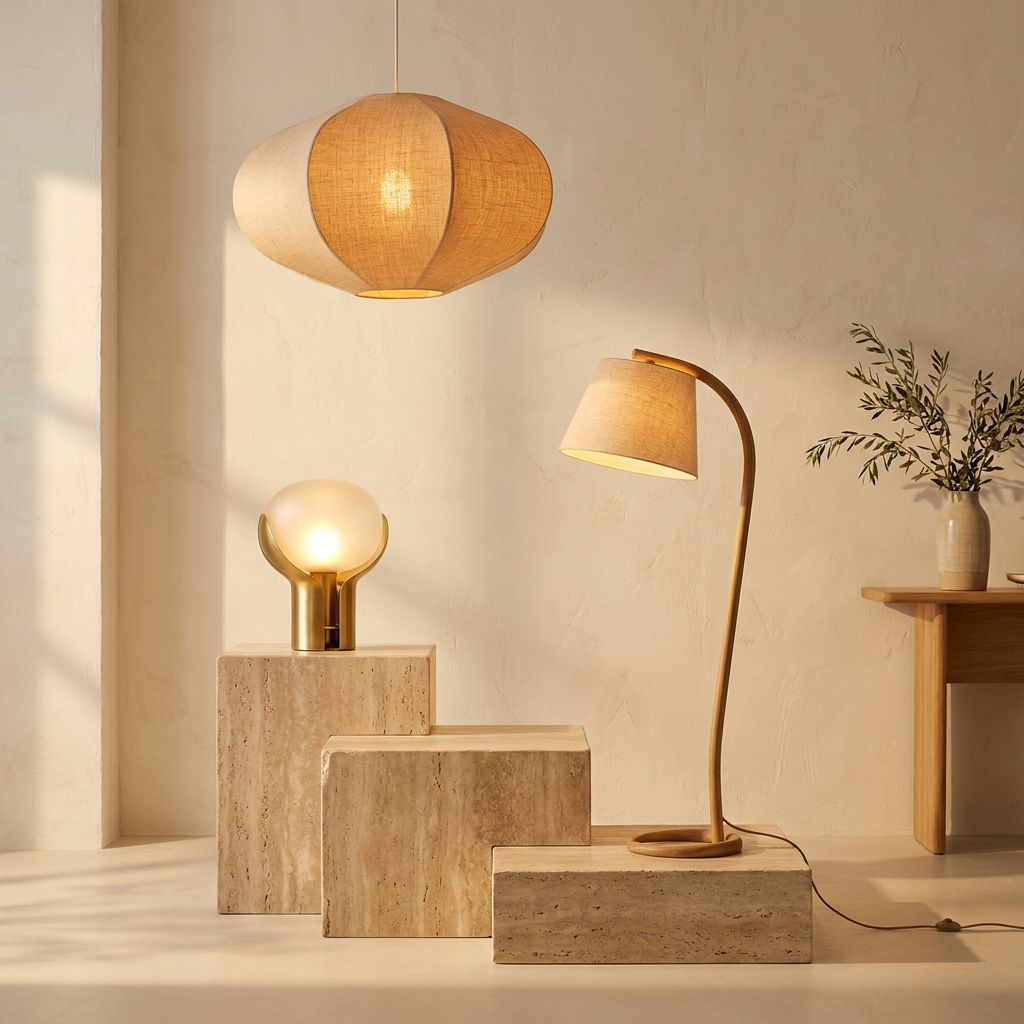
Why material matters more than shape
When most people search for a pendant light, they search by room or by style: kitchen island pendants, modern pendant lights. The categories are logical, but they describe the wrong thing.
The shape of a pendant is visible whether the light is on or off. The material is only fully revealed when the switch is thrown: what it does to the light it holds, whether it diffuses or directs, warms or clarifies, glows or gleams.
This guide covers the four natural materials that define Auren's range: travertine, alabaster, glass and silk. Each produces a distinct quality of light and suits a distinct kind of room.
Travertine: warmth, weight, and the glow of ancient stone
Travertine is a natural stone formed over thousands of years. Its characteristic cream and warm tones, its open pores and soft veining are a record of its geological history rather than a decorative treatment. No two pieces are identical, which is a feature of the material.
As a lighting material, travertine is not fully opaque. Light escapes through the porous stone and scatters soft, dappled patterns, so a travertine pendant reads as a warm object first and a light source second.
Travertine suits interiors built around natural tones: warm whites, oatmeal, clay, brass, linen and unfinished wood. It sits comfortably within Japandi and wabi sabi aesthetics, but also works in traditional British interiors where stone has a long domestic history.
Auren's travertine range covers four pendants:
- The Tove Travertine Pendant: a slim, textured disc with a low 7cm profile, lit from beneath by integrated LEDs.
- The Nara Travertine Pendant: a small, open, porous shade with a walnut cap, just 13cm wide, ideal for kitchen islands and small spaces.
- The Kairi Travertine Pendant: a honed travertine cylinder, pure or rounded, available as a single or a three-light walnut bar.
- The Mira Travertine & Glass Pendant: a travertine dome above a glass globe, for rooms where stone meets glass.
For a deeper look at the material, read our travertine pendant guide.
Alabaster: the material that diffuses light beautifully
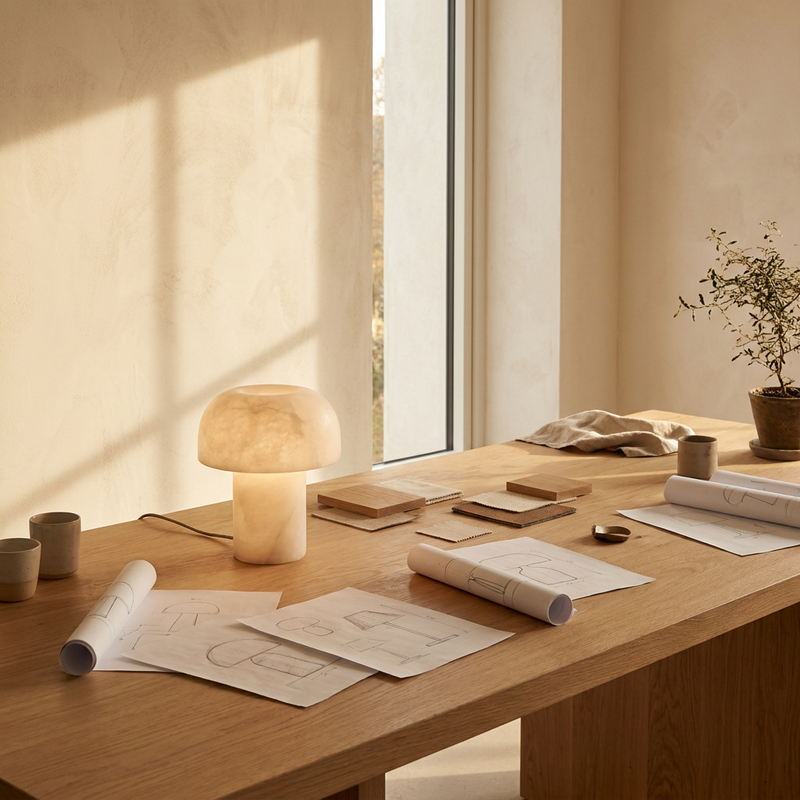
Alabaster is a fine-grained mineral that has been used in architecture and decorative arts for thousands of years. It is one of the few stones that light can pass through, and the effect is immediately recognisable: a soft, milky warmth that reveals the stone's delicate veining.
Alabaster suits rooms that prize atmosphere: bedrooms, living rooms used in the evening, and dining rooms where flattering light matters. It benefits from a simple interior, as it competes with nothing.
The Lune Alabaster Pendant (Ø14 x H15cm) pairs the alabaster with a warm brass frame, adding a polished detail that grounds the piece. For a fuller account, see our alabaster lighting guide.
Glass: tint, contrast, and the play of light on form
Glass behaves differently from stone, and the variation within glass is wider than most people expect. Clear glass disperses light broadly, while smoked or amber glass absorbs some of it and gives the light a rich, tinted glow.
Smoked glass also lets you see the bulb glowing at the heart of the shade, making the interior part of the fitting's interest.
The Halden Smoked Glass Pendant is blown in smoked grey glass in five organic silhouettes, from a low wide oval to a tall slender bottle. The Solen Glass Dome Pendant has a smooth dome in smoked grey or amber, in five sizes from 16cm to 38cm, with slim metal detailing that keeps the glass the focus. Both suit rooms where contrast is welcome: against a dark wall, above a kitchen island with stone worktops, or in a living room where drama is the goal.
Silk and fabric: soft light for rooms that want to breathe
Fabric shades produce a quality of light that no hard material replicates. Rather than transmitting or reflecting light, a silk shade filters it into a warm, even glow.
The Sena Pleated Silk Pendant is built from layered fabric and silk gathered into gentle pleats. The translucent layers diffuse the bulb completely, so the light is warm and even with no harsh glare. It comes in three diameters, 30, 40 and 50cm, from bedside to large living room or dining table.
The Kumo Organic Pendant brings a similarly soft, sculptural presence, with a textured shell in white or grey that glows gently at the rim at night.
How to choose by material: a quick decision guide
- Want warmth and a material that glows: travertine or alabaster. Travertine for natural, earthy palettes; alabaster for the softest possible light.
- Want contrast and a tinted glow: smoked glass, with the Halden or the Solen.
- Want softness and a restful quality: the Sena, or the Kumo.
- Want a linear form over a long surface: the Arden Linear LED Pendant, a slim black line in 100, 120 or 150cm, designed for tables and islands.
Our pendant buying guide walks through the full decision process, and our Japandi lighting guide shows how these materials sit within that aesthetic. Browse the full Auren pendant collection to see every material in one place.
Frequently asked questions
What is the difference between alabaster and travertine in lighting?
Both are natural stones, but they behave differently when lit. Alabaster is translucent, so light passes through it as a soft, milky glow. Travertine is open and porous, so light escapes through the stone and scatters dappled patterns, with the veining and variation visible. Alabaster suits rooms that want maximum softness; travertine suits rooms that want warmth and organic character.
Is smoked glass right for a kitchen?
Yes, particularly over a kitchen island where contrast is welcome. A smoked glass pendant over a light worktop creates a considered counterpoint, and in a darker kitchen it sits in the same tonal register as the room.
Are natural material pendant lights fragile?
Stone and glass should not be struck or subjected to sudden impact, and silk shades are the most delicate, so keep them away from moisture and direct heat. Handle and install with care.
What interior styles suit natural material lighting?
Travertine and alabaster sit naturally within Japandi, wabi sabi, Scandinavian and contemporary interiors. Smoked glass suits more dramatic rooms with darker palettes. Silk and fabric work across a wider range and provide softness in rooms with pattern and colour.
Can I mix materials in one room?
Yes, with care. Materials should share a quality, such as warmth, softness or weight. A travertine pendant and brass wall lights share a warm, natural register, as do an alabaster pendant and a linen table lamp.