
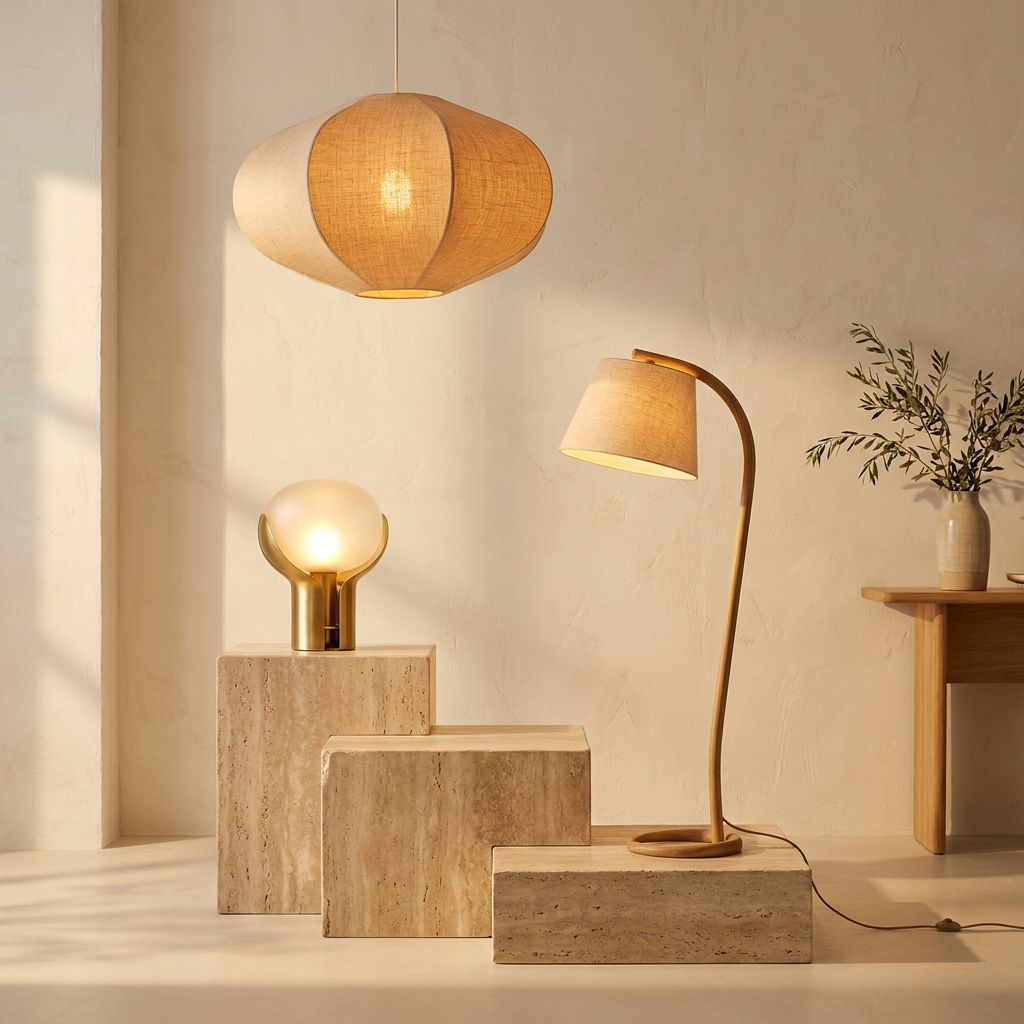

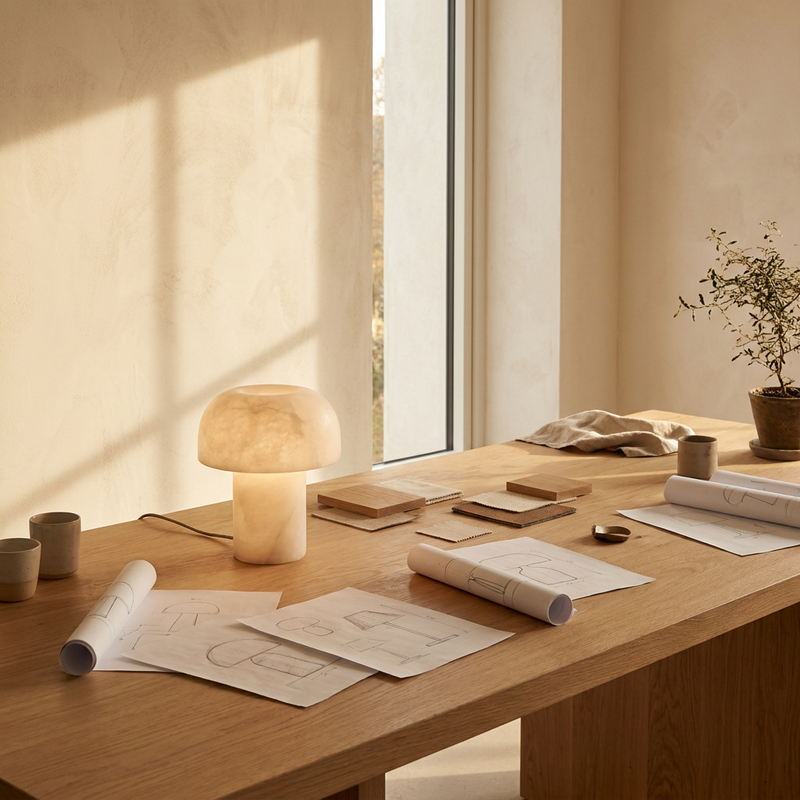
Lighting is not decoration. It is atmosphere.
Most living rooms in the UK are lit the same way: one ceiling rose, one central pendant or flush fitting, and a reading lamp in the corner if the room is lucky. The result is flat, undifferentiated light that makes a space feel like a waiting room rather than a home.
The good news is that this is one of the easiest things to fix, and you do not need to rewire the house to do it. Thoughtful layering of different light sources, each at a different height and with a different purpose, transforms how a living room feels within an evening.
This guide walks through five living room moods (calm and minimal, warm and cosy, dramatic, eclectic, and open plan) and shows which lighting choices serve each one. First, the framework behind them.
The layered lighting model: ambient, task, and accent
Every well-lit room uses at least two of these three layers. Most use all three.
Ambient light is the general illumination that fills the room. In a living room, this is usually a central pendant or a series of recessed downlights. It sets the baseline: enough light to move around safely, read faces, and understand the space.
Task light is directed light for a specific activity such as reading. A floor lamp beside an armchair, or a table lamp on a side table, handles this without flooding the entire room.
Accent light creates drama and depth. A wall light that washes a painted wall, a table lamp that glows behind a sofa, a floor lamp that draws attention upward into a corner: these give a room its personality after dark.
The goal is never maximum brightness. It is control, the ability to raise or lower each layer independently depending on what the room needs. This is why dimmer switches are worth fitting wherever possible.
For colour temperature, warm white LEDs in the range of 2700K to 3000K are almost always the right choice for a living room. Anything cooler tends to push the room into office territory.
Mood one: calm and minimal
The calm living room is deliberate in every choice. The palette tends to run to warm whites, oatmeal, soft sage or pale stone, and the lighting needs to match that restraint: no sharp shadows, no glare, no fittings that compete with the architecture.
A single pendant over the seating area provides the ambient layer. Natural stone and alabaster both diffuse light gently rather than directing it in a beam. The Tove Travertine Pendant works well here: a slim, textured travertine disc with a low 7cm profile that sits quietly within the architecture.
For task light, a slim floor lamp beside the sofa handles reading without adding visual weight. For accent, a table lamp on a console or shelf brings warmth to a corner that might otherwise feel empty. In a calm scheme, restraint is the point.
Mood two: warm and cosy
Warmth in a living room is less about the colour of the walls and more about where the light sits. High overhead light looks institutional. Low light, at eye level or below, reads as intimate and inviting.
For a warm, cosy scheme, pair the pendant with at least two table lamps, one on each side of the sofa, and position a floor lamp in the corner furthest from the window to anchor the room after dark.
The Kumo Organic Pendant suits this mood well. Its softly irregular, pebble-like form is inherently gentle, and its warm 3000K light pools softly beneath it. The Sena Pleated Silk Pendant diffuses the bulb completely, so the light is warm and even, with no harsh glare.
Dimmer switches are non-negotiable here. The difference between 70 per cent and 40 per cent brightness on a warm pendant is the difference between a comfortable living room and a genuinely restorative one.
Mood three: dramatic
Drama is achieved through contrast: a deep, rich backdrop against a single focused light source, or a bold pendant that earns its place as the focal point of the room.
This is where smoked glass comes into its own. The Halden Smoked Glass Pendant is blown in smoked grey glass, so the bulb glows amber at its heart while the glass holds a soft, tinted translucency. Against a dark-painted ceiling or above a leather sofa, it makes a clear statement.
Dramatic rooms often benefit from fewer light sources, not more. One pendant that commands attention is more effective than three that compete. Supplement it with one discreet floor lamp positioned out of the eyeline.
Mood four: eclectic
The eclectic living room is where rules matter less than instinct, and where lighting has the most freedom. Mixing materials, periods and scales is the point.
The Lune Alabaster Pendant has a particular quality in eclectic rooms: its brass frame adds a polished, warm detail, while the alabaster itself, one of the few stones that light can pass through, glows with a soft, milky warmth. It sits beside almost any other material without looking wrong.
In an eclectic scheme, give each light source a distinct purpose and position. Let the floor lamp, the table lamp and the pendant each occupy their own territory, so the room feels curated rather than cluttered.
Mood five: open plan
Open-plan living rooms need to function as multiple rooms at once, and lighting is the most effective way to define each zone without building walls.
The dining end almost always calls for a pendant directly over the table. The Arden Linear LED Pendant, available in 100cm, 120cm and 150cm, suits this: its slim black line echoes the shape of a table and creates a clear visual zone beneath it.
At the seating end, a pendant over the coffee table or sofa grouping establishes the zone from above, while floor lamps on either side of the sofa create the vertical boundaries. Keep the colour temperature consistent across both zones so the room reads as a single space.
A note on switching and control
The single most underrated element in any living room lighting scheme is the switching arrangement. A room where all lights operate from one switch has no range. Circuit your lighting so that the pendant, the floor lamps and any wall lights can operate independently, and fit dimmers wherever the fittings allow.
Explore the full Auren pendant light collection to find the right centrepiece for your living room, and read our guide to pendant light height and spacing before you finalise your drop length.
Frequently asked questions
What is the best lighting for a living room?
The best living room lighting uses at least two layers: a central pendant or ambient source, and at least one additional light at a lower level such as a floor lamp, table lamp or wall light. Warm white LEDs at 2700K to 3000K suit most living rooms, and dimmers let you shift between daytime and evening atmospheres.
How many lights do I need in a living room?
A well-lit living room typically has three to five light sources: one central pendant (or two in a large room), one or two table lamps, and a floor lamp. This gives you enough range for different activities and moods without overcrowding.
What colour temperature is best for a living room?
Warm white at 2700K is ideal for most living rooms. For a slightly crisper feel that stays warm, 3000K works well in more contemporary schemes.
Should a living room pendant light be on a dimmer?
Yes, wherever possible. A dimmer lets you use the same pendant at full brightness during the day and at a much lower setting in the evening. Check that your pendant and bulb are both dimmer compatible before fitting.
Can I use a pendant light in a living room?
Absolutely. A pendant works well as the central ambient source, particularly in rooms with ceilings of 240cm or above. Always check the finished drop before ordering and see our pendant buying guide for sizing advice.